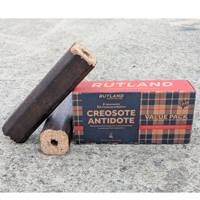
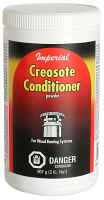
Creosote & Soot Removers
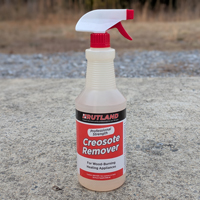
A creosote remover helps break down dangerous creosote buildup inside wood stove and fireplace chimneys.
These chimney treatments work as a creosote cleaner by converting sticky tar deposits into dry,
brushable ash that can be removed during normal chimney flue cleaning. Popular options include Rutland creosote remover, creosote powder treatments, chimney cleaning logs, and pellet stove
creosote remover products designed to maintain safe chimney operation.
Regular use of a chimney creosote remover helps reduce buildup between chimney inspections,
makes routine sweeping easier, and chimney fire prevention at its core. Whether you heat with a fireplace, wood stove, or pellet stove, these products help
support safer heating by controlling creosote and simplifying chimney maintenance.
Choosing the Best Creosote Remover for Your Chimney
Different chimney cleaning products work in different ways. Choosing the right creosote remover depends on how often you burn wood and the type of
heating appliance you use. The products below are designed to help
break down creosote deposits and make routine chimney flue cleaning with chimney brushes or our top rated rotary chimney pipe cleaning system easier and safer.
Creosote Powder Cleaners
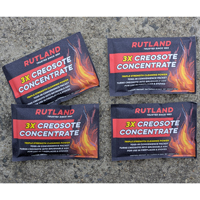
Creosote powder treatments are one of the most common types of chimney creosote remover. The powder is added to a hot fire where it
releases catalytic compounds that travel up the chimney and help convert creosote deposits into dry, brushable ash.
Once dried, the buildup becomes easier to brush away during routine chimney sweeping.
- Used regularly during the heating season
- Helps prevent thick creosote buildup
- Common brands include Rutland creosote remover
- < a href="https://www.woodstove-outlet.com/chimney/Rutland-Creosote-Remover.htm">Toss-in power treatments are available in sealed no-touch packets.
Creosote Sweeping Logs
Creosote logs (also called chimney cleaning logs) burn like normal
firewood but release minerals that attach to creosote deposits in stove pipe. These treatments
help weaken buildup so it flakes off more easily during later chimney brushing.
- Easy to use - burns like a normal log
- Often used once per season
- Helps loosen hardened creosote
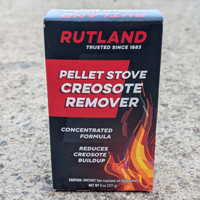
Pellet Stove Creosote Remover
Pellet stoves can also develop creosote buildup inside the flue. A pellet stove creosote remover helps control deposits created by
pellet fuel combustion and keeps the vent system cleaner between routine maintenance.
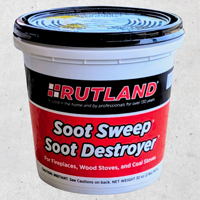
Soot Removers for Fireplaces
If your fireplace produces heavy black soot deposits, a chimney treatment designed
for cleaning soot from fireplace systems can help loosen carbon buildup.
Soot removers work similarly to creosote cleaners by helping deposits dry and detach
from chimney surfaces.
For best results, creosote and soot removers should be used alongside routine chimney
inspection and brushing. Chemical treatments help control buildup, but physical
chimney cleaning is still necessary for safe wood heating.
How to Remove Creosote From a Chimney
Removing creosote from a chimney typically involves a combination of chemical
creosote removers and mechanical chimney cleaning. Creosote remover treatments
help dry and loosen deposits so they can be brushed away during chimney sweeping.
- Use a creosote remover treatment during regular fires
- Each season remove your chimney cap and clean chimney buildup with a chimney brush or rotary scruber
- Inspect the chimney for heavy creoseote buildup as you use your flu
- Burn dry seasoned wood to reduce creosote formation
What Creosote Looks Like in a Chimney
Creosote buildup inside a chimney develops in stages as wood smoke cools and condenses inside the flue.
Understanding what creosote looks like helps homeowners know when it's time for chimney flue cleaning or a creosote remover treatment.
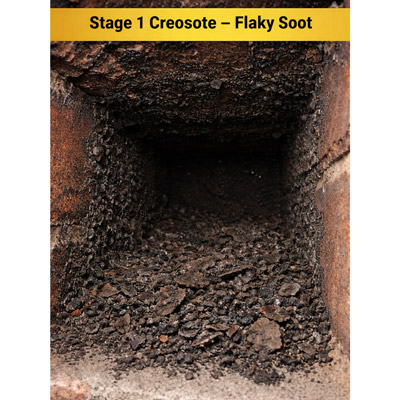
Stage 1 Creosote - Flaky Soot
Stage 1 creosote appears as loose black or brown flakes inside the chimney.
This buildup is usually dry and powdery and can be removed easily with a chimney brush.
At this stage, using a creosote cleaner or creosote powder can help
prevent deposits from becoming thicker and harder to remove.
- Light, dusty deposits
- Often mixed with soot
- Easiest stage to clean
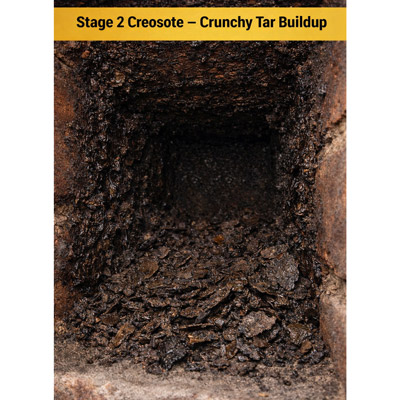
Stage 2 Creosote - Crunchy Tar Buildup
Stage 2 creosote looks thicker and more tar-like. Deposits become darker and more brittle,
forming crunchy flakes along the chimney walls. At this stage many homeowners use Rutland creosote remover or other chimney creosote remover products to
help dry the buildup before brushing.
- Darker tar flakes
- Harder to remove with brushing
- Indicates increased chimney buildup
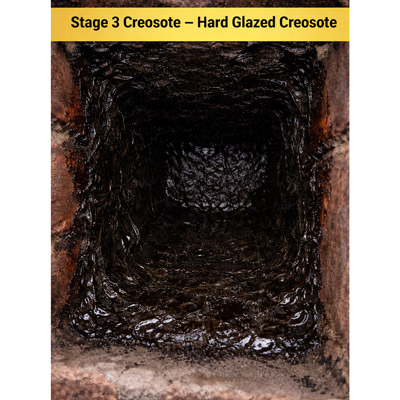
Stage 3 Creosote - Hard Glazed Creosote
Stage 3 creosote is the most dangerous type of buildup. It appears as a shiny,
hard black glaze on the inside of the chimney flue. This type of creosote can be
very difficult to remove and is the leading cause of chimney fires.
- Hard shiny coating
- Highly flammable
- Often requires professional chimney cleaning
Using a chimney creosote remover regularly, burning dry seasoned wood,
and performing routine chimney inspections helps prevent creosote from reaching this stage.
Frequently Asked Questions About Creosote Removers, Soot Removers & Chimney Cleaning
How often should a wood stove chimney be cleaned?
A wood stove chimney pipe system should be inspected at least once a year and cleaned whenever creosote buildup reaches about 1/8 inch thick. Homes that heat primarily with wood often benefit from mid-season chimney cleaning
and an end-of-season cleaning. Regular inspection helps prevent dangerous chimney fires. Those who learn how to remove creosote from chimney save time and money each year they do proper maintenance and cleaning.
What is creosote and why does it build up in chimneys?
Creosote is a sticky, tar-like residue created when wood smoke cools inside a chimney. As smoke rises, unburned gases
condense on the chimney walls and harden into creosote. Over time this chimney creosote buildup can restrict airflow and become highly
flammable, which is why regular chimney cleaning is important.
What is soot from a fireplace?
Soot is a fine black powder created by incomplete combustion of wood, coal, or other fuels. It commonly collects on
chimney walls, inside the firebox, and sometimes around the fireplace opening. While soot is generally lighter and
easier to remove than creosote, heavy soot buildup can still restrict airflow and reduce fireplace efficiency. Soot also builds in wood burning stoves and chimney pipe systems.
What is the difference between soot and creosote?
Soot and creosote are both byproducts of burning wood, but they are different materials.
- Soot is a dry black powder made mostly of carbon particles. It forms during incomplete combustion and is usually easy to brush or sweep away.
- Creosote is a sticky, tar-like residue formed when wood smoke condenses inside a cooler chimney. It can harden into thick deposits and is highly flammable.
Soot is usually easier to remove, while creosote buildup requires more careful chimney maintenance and sometimes
specialized creosote remover treatments.
Do creosote remover products actually work?
Creosote remover treatments work by helping convert sticky creosote deposits into dry, brushable ash. When used
regularly, these chimney cleaner treatments help make wood stove chimney cleaning easier and reduce heavy buildup
between chimney brushings.
How often should you use a creosote remover?
Most creosote remover products are used every 20-30 fires or roughly once every 1-2 weeks during heavy winter heating.
Using a creosote remover regularly helps prevent thick creosote buildup and keeps chimney cleaning manageable.
What are soot removers and how do they work?
Soot removers are chimney treatments designed to help loosen and break down soot deposits inside a chimney or
fireplace flue. When added to a hot fire, these products release compounds that help dry soot deposits so they can
be brushed or swept away more easily during routine chimney cleaning. You can make cleaning soot from fireplace easier on your elbow greese.
How do soot remover chemicals work in a fireplace or chimney?
Cleaning soot from fireplace using soot remover treatments typically release catalytic compounds into the fire. These compounds travel up the chimney
with the exhaust gases and interact with soot deposits, helping dry them out and reduce their ability to cling to
chimney walls. This process can make routine chimney brushing more effective.
Can soot removers and creosote removers be used together?
Yes. Many chimney maintenance routines include both soot remover and creosote remover treatments. Soot removers help
reduce powdery carbon buildup, while creosote removers help break down sticky tar deposits. Together they support
cleaner, safer chimney operation between regular brush cleanings.
Can creosote remover replace chimney sweeping?
No. A creosote remover helps break down creosote deposits, but it does not replace chimney sweeping. Regular chimney
brushing is still necessary to physically remove loosened deposits from the chimney flue.
What does creosote look like inside a chimney?
Creosote can appear in several forms:
- Flaky soot - easy to brush out
- Crunchy tar flakes - moderate buildup
- Shiny black glaze - the most dangerous and hardest to remove
Using a chimney cleaner regularly helps prevent creosote from turning into hard glaze.
What causes excessive soot or creosote buildup?
Several factors increase soot and creosote formation:
- Burning wet or unseasoned firewood
- Low smoldering fires
- Poor chimney draft
- Cold chimney temperatures
Burning dry seasoned wood, maintaining proper airflow, and performing regular chimney cleaning help control both
soot and creosote buildup.
Complete Chimney Cleaning Tools
Using a creosote remover is only one part of proper chimney maintenance.
For complete chimney pipe cleaning you may also need tools like a rotary chimney cleaning system that easily connect to your drill, replacement stove pipe,
and simple chimney pipe to keep your wood stove system operating safely.