

Rutland Creosote Remover
$34.49

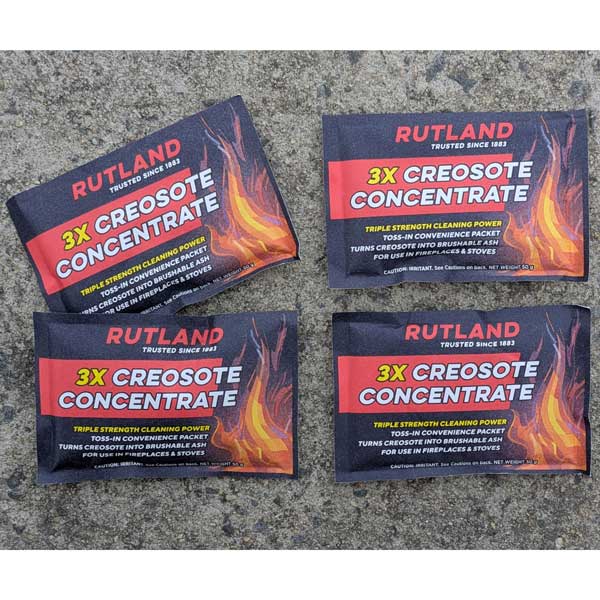
Creosote buildup is one of the biggest safety concerns for homes that heat with wood. As smoke cools inside a chimney, unburned gases condense and form creosote-a sticky residue that can restrict airflow, reduce draft, and raise the risk of chimney fires. This Rutland 3X Creosote Remover works as a toss-in chimney cleaner to help break down deposits so routine wood stove chimney cleaning is easier and more effective. Sold here in a convenient pack of four.
Quick Highlights
- Creosote remover treatment designed for wood stoves and fireplaces
- Helps convert sticky buildup into dry, brushable ash
- Supports safer, easier wood stove chimney cleaning between brushings
- 4-pack for easy seasonal maintenance
How This Creosote Remover Works
Creosote removers use a catalytic action to help dry and break down creosote deposits inside the flue. When added to a hot fire, this chimney cleaner helps turn sticky, tar-like buildup into deposits that are more likely to flake and brush away during normal chimney maintenance.
How Often Should You Clean a Chimney?
A solid rule of thumb: inspect chimneys yearly and clean them when creosote buildup reaches about 1/8 inch thick.
- Light/occasional use: typically once per year
- Regular winter heating: mid-season and end-of-season are common
- Heavy daily use: inspect more often and clean as needed
Even if you use a creosote remover, regular brushing and inspection are still essential for safe operation.
How Often to Use Creosote Remover
For most households burning regularly, a practical schedule is:
- One packet every 20-30 fires
- During heavy heating season, many people use one packet every 1-2 weeks
- Continue routine chimney brushing as part of your seasonal cleaning
Always follow the instructions on the package label for best results and safe use.
Chimney Cleaning With vs. Without Creosote Treatment
Without Creosote Remover
- Deposits can be thick, sticky, and tar-like
- More time spent scraping and fighting buildup
- Higher chance of hardened, shiny "glaze" forming
- Draft can suffer as buildup narrows the flue
With Regular Creosote Remover Use
- Deposits tend to dry out and become more brushable
- Chimney brushing is often faster and more effective
- Helps slow heavy buildup between cleanings
- Supports steadier draft for safer, more efficient burning
The 3 Stages of Creosote Buildup
Stage 1: Flaky Soot
- Powdery, dusty black deposits
- Usually easy to remove with a chimney brush
- Common when fires burn hot and clean
Stage 2: Crunchy Tar Deposits
- Darker, thicker flakes
- Harder to remove than soot
- Often linked to cooler chimneys or smoldering fires
Stage 3: Glazed Creosote (Most Dangerous)
- Hard, shiny black coating
- Most difficult to remove
- Highest chimney fire risk
A good chimney maintenance routine-dry wood, good airflow, regular brushing, and periodic chimney cleaner treatments helps keep creosote from building into the dangerous glaze stage.
Best Practices for Wood Stove Chimney Cleaning
- Burn dry, seasoned firewood
- Avoid long, low smoldering burns when possible
- Use a creosote remover regularly during the heating season
- Brush and inspect the chimney on a routine schedule
Product Details
- Product: Rutland 3X Creosote Remover
- Type: Toss-in chimney cleaner packet
- Use: Wood stoves and fireplaces
- Pack size: 4 packets
Rutland 97C20
4 Packets per order

